

Authorised Indian Distributor
Saxsons Group
New Delhi, India · Since 1997
Breast & Lung Positioning SolutionsWing-Board · Supine + Prone Breast Boards · Supine + Prone Breast Cushions · Prone Belly Cushion
Breast and lung positioning accessory family — Wing-Board T-Grip for above-head arm clearance, variable-angle supine breast board, prone breast board with breast cut-out, matching supine + prone breast cushions and prone belly cushion. Indexed onto the thorax baseplate for tangential breast IMRT, DIBH heart-sparing workflows, prone-breast setup (large breast or lung-sparing indication) and lung tangential treatment. Radiolucent composite construction; < 2 % beam attenuation. Wipe-down decontaminable surfaces.
Key Features
- Six-piece breast and lung positioning accessory family — covers supine tangential, prone breast, DIBH heart-sparing and lung tangential workflows
- Wing-Board T-Grip — above-head dual-arm grip clears the chest / breast treatment field; DIBH-compatible ergonomics for breath-hold workflows
- Supine breast board — variable-angle inclined; per-patient angle recorded once at simulation, reproduced on every linac session
- Prone breast board — left- or right-side breast cut-out; reduces lung dose and skin dose vs supine; especially relevant for larger breasts
- Supine breast cushion — conformal support under the supine board; improves comfort + reproducibility without slipping at the indexed angle
All Features
- Six-piece breast and lung positioning accessory family — covers supine tangential, prone breast, DIBH heart-sparing and lung tangential workflows
- Wing-Board T-Grip — above-head dual-arm grip clears the chest / breast treatment field; DIBH-compatible ergonomics for breath-hold workflows
- Supine breast board — variable-angle inclined; per-patient angle recorded once at simulation, reproduced on every linac session
- Prone breast board — left- or right-side breast cut-out; reduces lung dose and skin dose vs supine; especially relevant for larger breasts
- Supine breast cushion — conformal support under the supine board; improves comfort + reproducibility without slipping at the indexed angle
- Prone breast cushion — chest / abdomen / pelvis support under the prone board; reduces inter-fraction posture drift
- Prone belly cushion — belly-board cut-out displaces small bowel out of the high-dose pelvic region; reduces small-bowel dose by ≈ 10–15 % vs supine
- Radiolucent composite construction — typical < 2 % beam attenuation at MV photon energies; safe to place in the treatment field
- Indexed mounting to the thorax baseplate — pairs with the patient-positioning baseplate platform via standard couch-bar pitch
- Wipe-down decontaminable surfaces — all boards and cushions reusable across patients with standard radiotherapy decontaminants
- Compatible with the Wing-Board T-grip from the SBRT Immobilization System — single arm-support accessory across breast IMRT and SBRT workflows
- AAPM TG-66 breast-radiotherapy and TG-263 nomenclature framework anchors the validation programme
- Documentation: per-batch material certificate, attenuation report, IQ / OQ / PQ protocols
Technical Specifications
| Family composition | Wing-Board T-Grip, supine breast board, prone breast board, supine breast cushion, prone breast cushion, prone belly cushion |
| Board construction | Radiolucent composite — carbon-fibre or equivalent; typical < 2 % beam attenuation at MV photon energies |
| Supine board angle | Variable-angle inclined; indexed lock for reproducible setup |
| Prone breast board | Left-side and right-side breast cut-out options; supports breast hanging free below the board surface |
| Cushion construction | Conformal foam / polyurethane — wipe-down decontaminable |
| Wing-board arm support | Dual-arm T-grip above-head; DIBH-compatible ergonomics |
| Indexing | Standard couch-bar pitch indexed to the thorax baseplate platform; no per-room recalibration |
| Imaging compatibility | CT, MR and DRR planning workflows; kV-imaging compatible for daily IGRT verification |
| Decontamination | Wipe-down compatible with standard radiotherapy decontaminants |
| Compliance framework | AAPM TG-66 (breast radiotherapy), AAPM TG-263 (nomenclature), AAPM TG-176 (dosimetric handling) |
| Regulatory status (India) | Passive non-radioactive accessory — CDSCO Medical Devices Rules 2017 import registration; the accessory family itself does not need AERB licensing (that sits on the linac facility) |
| Documentation | Per-batch material certificate, attenuation report, IQ / OQ / PQ protocols |
Applications
Five worked breast + lung workflows the six-piece accessory family covers
Supine tangential breast (left, with DIBH)
Supine breast board + supine breast cushion + wing-board T-grip. Variable board angle locks the chest-wall angle for tangential fields; T-grip clears the lateral beam path; DIBH gating delivers the heart-dose sparing benefit. Per-fraction reproducibility within < 3 mm at the chest wall.
Supine tangential breast (right)
Same chain as left-breast minus the DIBH gating requirement. Right-side tangential setup; reproducibility expectation per AAPM TG-66.
Prone breast (large breast or lung-sparing)
Prone breast board + prone breast cushion + prone belly cushion. Breast hangs free in the cut-out; lung is displaced anteriorly; setup reduces ipsilateral lung dose by 30–50 % vs supine for larger breast volumes.
Lung tangential / 3DCRT
Thorax baseplate + supine breast cushion (posture support) + wing-board T-grip. Same chain as breast tangential; useful for tangential lung fields where the arm position dominates beam-path clearance.
Combined breast + nodal-pelvic
Thorax + pelvis baseplate chain with the supine breast board + prone belly cushion engaging on different fraction days. Single accessory pack covers both posture modes — supine for breast, prone for nodal pelvic.
AAPM TG-66 inspection-ready chain
Per-batch material certificate + attenuation report + per-patient breast-board angle record. The facility QA + medical-physics audit programme reads the chain at routine inspection.
Why Breast & Lung Positioning Solutions?
Some patients are better treated supine (smaller breast, standard chest-wall geometry); some benefit from prone (larger breast, lung-sparing indication). The accessory family covers both — supine breast board + cushion AND prone breast board + cushion — so the department picks per-patient without a separate procurement cycle.
Wing-Board T-grip clears the arms for the lateral tangent beam paths; the breast cushion holds the patient at the indexed posture even during the 15–25 second breath-hold. DIBH-driven heart-dose reduction (typically 30–50 % heart-mean-dose reduction for left-breast) is reproducible only when the posture chain locks every fraction.
Indexed mounting to the thorax baseplate at the standard couch-bar pitch. The CT-sim setup, the MR-sim setup (where used) and the linac setup all read the same indexing. The breast-board assembly does not need per-room recalibration; the patient setup transfers room-to-room at the indexing precision of the baseplate.
Variant matrix
Pick the components — supine or prone, board or cushion
Six components covering supine and prone breast workflows, lung tangential and combined breast-pelvic setups. The use-case build sheet matches components to the per-patient breast-radiotherapy decision; the Accessories Matrix below covers the indexing and material details.
Six-component accessory family
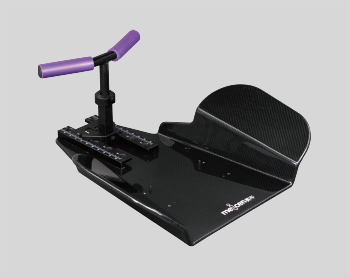
Wing-Board T-Grip
Above-head dual-arm grip — clears both arms out of the chest / breast treatment field; DIBH-compatible ergonomics; pairs with the thorax baseplate
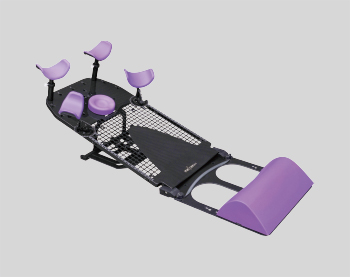
Supine Breast Board
Variable-angle inclined board for supine tangential breast treatment; angle indexed for reproducible setup across the fraction series
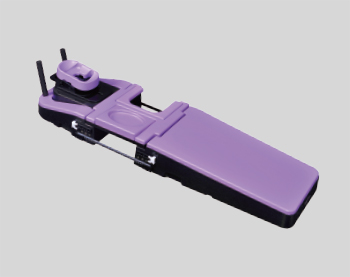
Prone Breast Board
Prone breast treatment board with breast cut-out — left- or right-side breast hangs free from the chest wall to reduce skin dose and lung exposure
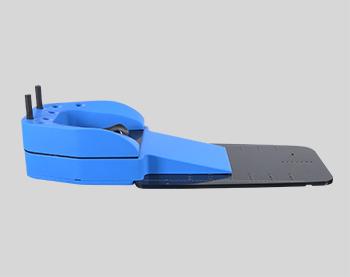
Supine Breast Cushion
Conformal cushion under the supine breast board — supports the patient at the indexed angle without slip; improves comfort + reproducibility
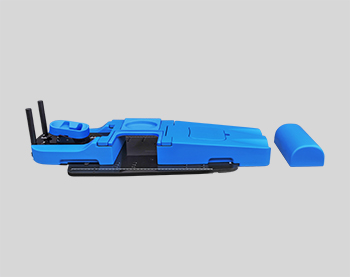
Prone Breast Cushion
Conformal cushion under the prone breast board — supports the chest, abdomen and pelvis at the prone angle; reduces inter-fraction posture drift
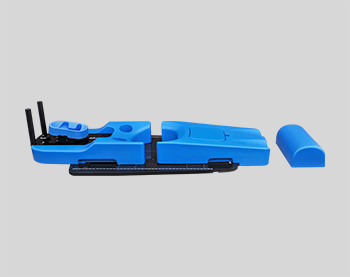
Prone Belly Cushion
Belly-board cushion for prone pelvic or breast-pelvis combined workflows — displaces small bowel out of the high-dose region
Use-case build sheet
| Workflow | Configuration | Why |
|---|---|---|
| Left-breast tangential + DIBH | Thorax baseplate + supine breast board (variable angle) + supine breast cushion + wing-board T-grip | Heart-dose-sparing benefit from DIBH is reproducible only when the breast-board angle and arm position lock identically every fraction. Indexed angle + T-grip + cushion combination satisfies the AAPM TG-263 / TG-66 setup-reproducibility expectation. |
| Right-breast tangential | Thorax baseplate + supine breast board + supine breast cushion + wing-board T-grip | Right-side tangential setup; same chain as left-breast but no DIBH benefit. Board angle indexing still matters for reproducible setup across the 15–25 fraction series. |
| Prone-breast (large breast) | Thorax baseplate + prone breast board + prone breast cushion + prone belly cushion | Larger breasts hang free in the prone board cut-out — reduces lung dose and skin dose vs supine. Especially relevant for breast targets with axillary involvement or where supine breast positioning crosses the contralateral breast. |
| Lung tangential | Thorax baseplate + wing-board T-grip + supine breast cushion (for posture support) | Lung tangential and 3D-CRT workflows benefit from the same above-head arm clearance and posture support as breast tangential. The T-grip + cushion combination clears the lateral and oblique beam paths. |
| Combined breast-pelvic | Thorax + pelvis baseplate chain + supine breast board + prone belly cushion (for nodal pelvic fields) | Combined breast + nodal-pelvic workflows where the supine breast board and the prone belly cushion engage on different fraction days. Single accessory pack covers both posture modes. |
Accessories Matrix
| Angle-indexed lock on supine breast board | Reproducible board angle across the fraction series; per-patient angle recorded once at simulation, reproduced on every linac session |
| Cut-out shape on prone breast board | Allows left- or right-side breast to hang free below the board — reduces skin dose and lung exposure vs supine setup |
| Belly-board cut-out on prone belly cushion | Displaces small bowel away from the pelvic high-dose region; reduces small-bowel dose by ≈ 10–15 % vs supine for rectum and prostate-bed workflows |
| Wing-board T-grip dual-arm hold | Symmetric above-head arm position; DIBH-compatible ergonomics; clears lateral beam paths |
| Indexed mounting to thorax / pelvis baseplate | Pairs with the patient-positioning baseplate platform via the indexed couch-bar pitch — no per-room recalibration of the breast-board assembly |
| Radiolucent composite construction | Typical < 2 % beam attenuation at MV photon energies; the breast and lung treatment beam paths see negligible perturbation |
| Wipe-down decontaminable surfaces | All boards and cushions are wipe-down compatible with standard radiotherapy decontaminants; reusable across patients |
| Patient comfort liner (single-use) | Disposable hypoallergenic liner option improves patient comfort during the often-lengthy breast-treatment fraction; does not affect setup reproducibility |
Per-batch material certificate and attenuation report ship with every consignment. Indexed mounting is specified to the receiving thorax baseplate during site IQ / OQ.
Catalogs & Resources
AAPM references that anchor breast and lung positioning workflows. Contact Saxsons for component selection and pairing with the thorax baseplate.
AAPM TG-66 — Quality assurance for clinical radiotherapy treatment planning
AAPM task-group report on radiotherapy treatment-planning QA including breast-radiotherapy planning expectations.
AAPM TG-263 — Standardising nomenclatures in radiation oncology
AAPM framework for standardised nomenclatures used in radiation-oncology treatment planning and reporting.
AAPM TG-176 — Dosimetric effects of couch tops and immobilisation devices
AAPM task-group report on dosimetric characterisation of immobilisation devices including breast-board attenuation.
Breast & Lung Positioning Solutions
More for this product
Each card opens a focused post for a specific specialty — peer-reviewed evidence and clinical workflow, written for the persona you select.
FAQ
Breast and lung positioning — questions we hear from Indian radiation-oncology teams
Why breast tangential geometry needs dedicated hardware, what DIBH reproducibility asks of the T-grip, when to pick prone over supine, and how the family is supplied across India.
Q.Why does breast radiotherapy need a dedicated positioning system rather than the general baseplate?
Breast tangential and IMRT plans send tangent beams at 45–70° through the breast tissue with the arm above the head, chest wall tilted, and either supine or prone patient orientation. General-purpose baseplates do not carry the T-grip arm support, angled chest-wall wedge or prone-breast opening the tangential-field geometry requires. Without dedicated hardware the therapist improvises with sponges — setup reproducibility drops fraction-to-fraction and the tangential beam paths shift into normal lung and heart tissue.
Q.What does the DIBH breast workflow need from the positioning hardware?
Deep-inspiration breath hold (DIBH) reduces cardiac dose in left-breast radiotherapy by displacing the heart away from the tangent beams. The positioning board has to hold the arm above the head comfortably enough for the patient to complete 20–30-second breath holds repeatedly across the fraction; the T-grip handle placement, wedge angle and shoulder-support geometry directly affect how long the patient can hold and how reproducibly they hold. AAPM TG-66 sets the framework the hardware is engineered against.
Q.When should the prone-breast board be picked over supine?
Prone-breast positioning drops the breast tissue away from the chest wall — the tangential beams pass through breast tissue only, minimising the volume of lung and heart in the beam path. Prone is typically preferred for larger breasts and for left-sided treatments where cardiac dose is the binding constraint. The dedicated prone-breast board provides the breast aperture, chin support and pelvic-tilt geometry that makes prone reproducible across the fraction series.
Q.Does the same board handle lung IMRT and tangential lung boost?
Yes. The chest-wall wedge and above-head arm support geometry work for lung IMRT tangential fields as well — the same board covers breast tangential + lung tangential + supraclavicular boost setups in a mixed treatment cohort. The T-grip pocket carries the DIBH monitor mount for lung DIBH where indicated.
Q.How is the breast/lung positioning family supplied and supported in India?
Distributed across India by Saxsons Group. Supply covers the supine and prone breast boards, T-grip wing-board, prone-belly cushion, DIBH-monitor mount options and comfort liners; commissioning against the department's CT-sim and linac couch geometry is handled directly by Saxsons. The system is a passive non-radioactive accessory imported under CDSCO Medical Devices Rules 2017 — no AERB licence needed for the device itself.
Breast & Lung Positioning Solutions supplier in India — Saxsons Group
Saxsons Group has supplied radiotherapy equipment to over 1,000 Indian hospitals since 1988. Every consignment of Breast & Lung Positioning Solutions ships with cold-chain logistics, AERB import documentation, CDSCO registration references and a Certificate of Analysis delivered before dispatch — the paperwork your radiation-safety and procurement teams need, pre-assembled.
- Nationwide delivery footprint — every metro and tier-2 city in India, scheduled to your treatment / procedure calendar.
- AERB & CDSCO documentation — import licence, radiation-safety paperwork and RSO briefing pre-assembled for the audit file.
- 40+ years in Indian oncology — long-standing supply relationships with AIIMS, Tata Memorial, and hundreds of tertiary-care centres.
- Single point of accountability — one purchase order, one delivery contact, one after-sales team across the whole product family.
Also supplied by Saxsons Group across India
Six-piece accessory family for breast and lung radiotherapy
Contact Saxsons Group for individual component selection or full family ordering, thorax-baseplate pairing build sheet and IQ / OQ / PQ documentation.